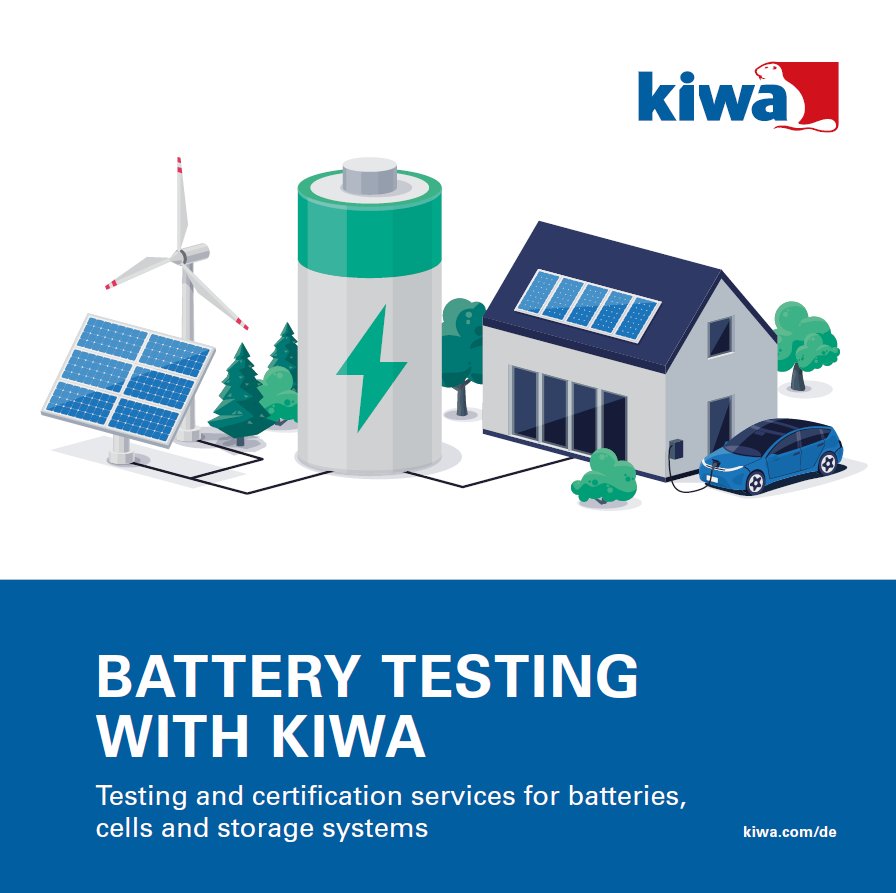

Battery testing according to UN 38.3
Receive a quote tailored to your needs
The UN 38.3 Test
The UN 38.3 transport test includes a total of eight sequential individual tests. The tests depend on the type of lithium batteries or cells. Multiple samples must be tested. For rechargeable lithium batteries weighing less than 12 kg, for example, tests T1 to T5 and T7 must each be carried out with 8 battery samples. For batteries weighing more than 12 kg, the number of test samples is reduced by 50%.
Individual tests according to UN 38.3:
- T1: Altitude Simulation
- T2: Thermal Test
- T3: Vibration
- T4: Shock
- T5: External Short Circuit
- T6: Impact
- T7: Overcharge
- T8: Forced Discharge
The current version of UN 38.3 includes several important updates to the testing requirements:
Integrated Batteries: Updated to allow testing of batteries within devices.
Disassembly: Introduces additional test criteria; it is recommended to treat all cases considered as “borderline” disassembly as a test failure.
Considerations for Rechargeable Batteries: Requirements for cycling have been changed, reducing the number of charge/discharge cycles before testing from 50 to 25. Test tables have also been updated to reflect these changes.
Test Summary: The term “Battery Test Summary” is now clearly defined, along with the requirement that the test summary “must be made available.” In addition, the requirement has been introduced that the name and title of the signatory must be included as an indication of validity.
Please contact us directly to receive more information and details about UN 38.3 testing. We are happy to support you with the market introduction of your products.
Accreditation
Thanks to our numerous national and international accreditations and certifications, you can be sure that our work meets high quality standards, certificates, and attestations enjoy excellent worldwide acceptance. Kiwa Primara has been accredited by the German Accreditation Body (DAkkS) since 2011 in accordance with DIN EN 17025 and DIN EN 17065 to test and certify electrical equipment. In addition, we offer testing and certification in accordance with the IECEE CB Scheme procedure and are a recognized GS certification body.
Product safety
We test product safety in accordance with national and international standards, guidelines and regulations.
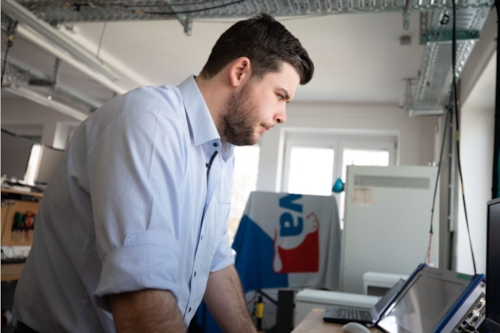
Electric Car Charging Infrastructure
Thanks to our extensive accreditations in the field of electromobility, Kiwa is your partner for testing your equipment and thus an important partner for proving compliance with standards.

Grid integration
Worldwide, there are a multitude of local grid connection guidelines and standards that must be complied with depending on the country.

Lithium-Ion Batteries and Other Technologies
We conduct out tests for you in accordance with IEC62133-2; EN62133-2; UN38.3; UL1642 to ensure the safe transport of lithium batteries.

Performance test of battery cells in cycles
Kiwa Primara tests battery cells for their performance in cycles - this is one of our core elements in a test. In a battery cycling test, a battery charges as well as discharged. Kiwa Primara tests your batteries according to your wishes and needs.

Lifetime / MTBF
To provide reliable information about the expected reliability (failure behavior) of electronic products, calculating failure rates, MTBF (Mean Time Between Failure), or MTTF (Mean Time To Failure) of assemblies and devices is essential.