
Key developments in recycling and certification
Regulations related to recycling are changing. This affects not only organizations that collect or recycle waste, but also companies involved in producing, transporting and processing plastics. As an organization, you will face stricter regulations, increased oversight and new requirements for handling waste and raw materials. What does this mean, and who does it apply to? What does it mean for your organization?
1. Value chain wide focus on zero pellet loss
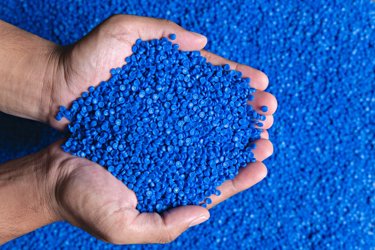
For companies producing and processing plastics, the topic of zero pellet loss is becoming increasingly important. European regulations state that companies must take measures to prevent plastic pellets from entering the environment. This is not limited to waste processing, but also applies to processes during production, processing, storage and transportation.
Operation Clean Sweep (OCS) is a voluntary certification scheme that helps organizations demonstrate that these measures are properly implemented. OCS applies to different parts of the plastics value chain, including producers, processors and logistics companies.
2. European PPWR and SUP directives
The Single Use Plastics directive (SUP, Directive (EU) 2019/904) and the Packaging and Packaging Waste Regulation (PPWR, Regulation (EU) 2025/40) together form the core framework of the European approach to reducing plastic pollution and accelerating the circular economy.
While the SUP directive focuses on phasing out and reducing specific single use plastic products, the PPWR introduces uniform and binding requirements for all packaging throughout its entire lifecycle, from design to the waste phase.
3. WSR legislation
An important development is the WSR legislation (European Waste Shipment Regulation, Dutch: EVOA). This regulation takes effect on 21 May 2026 and applies to all waste streams crossing borders. It is now clear that for waste materials on the green list, the use of DIWASS, which stands for Digital Waste Shipment System, has been postponed. Every waste shipment transported to another country must comply with stricter requirements. The receiving company in the destination country must demonstrate that the waste is processed correctly. An audit at that company is mandatory for this purpose.
The reasoning behind this legislation is clear. A great deal is already being done within the Netherlands and the European Union in the field of recycling. The regulation is intended to prevent waste from being dumped outside the EU or processed under poor conditions, for example with risks to the environment or through the use of child labor.
The WSR applies to many different product groups. This means there is a strong possibility that your organization will also be affected, even if you are not always aware of it yet.
4. Stricter enforcement around WEEELABEX
There is also a clear development taking place around WEEELABEX (Waste Electrical and Electronic Equipment Label of Excellence). In the Netherlands, it’s established that companies may collect discarded electrical and electronic equipment. As soon as they perform any action on it, such as cutting off a plug, certification becomes mandatory.
These regulations are not new, but enforcement has clearly become stricter over the past couple of years. While mainly larger companies were already prepared for this, smaller companies and family owned businesses are now also facing inspections more frequently.
5. Developments beyond legislation
Changing regulations also lead to other shifts in the market. For example, the revised WSR rules are creating a greater need for audits abroad. This affects companies exporting waste, but also organizations within the value chain that receive and process materials.
At the same time, interest in End of Waste certification is growing. This certification is especially relevant for companies working with clean and pure materials. Once certified as End of Waste, a material is no longer considered waste, but a raw material. This means it falls outside the scope of WSR legislation.
In addition, some countries, such as China, don’t accept waste materials but do accept raw materials. In countries such as Italy, End of Waste certification is also increasingly requested. If your organization works with clean material streams, this can expand your market opportunities.
6. Social and market developments
In addition to the movement to keep waste within Europe as much as possible, there is also a clear societal shift toward turning waste into raw materials. Within the market, there are leading companies actively investing in this transition. Other companies are taking a wait and see approach and monitoring how regulations continue to develop.
More and more companies want to prepare for these developments. Sometimes because they already have clean materials and sometimes because they want to remain flexible and be able to adapt quickly when necessary. Circularity plays an important role in this, although the level of attention varies by country. In the Netherlands, there is generally more focus on this topic than in some other countries.
Want to learn more?
Would you like more insight into these developments and what they mean for your organization? In our guide ‘Recycling and Certification’ you can discover how legislation, certification and practical implementation come together.

Learn more?
Would you like to know more about this topic? Call us at +31 (0)88 998 46 76 or fill out the contact form. Our experts will be happy to help you!