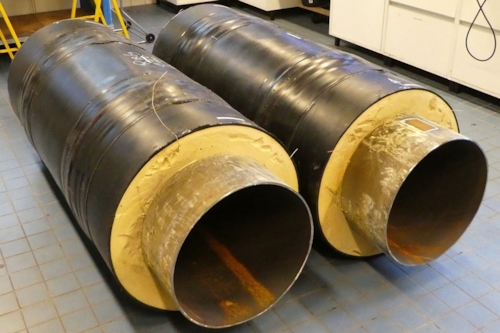
How do you know if an electrofusion joint in a piping system is truly free of defects?
The strip bend test according to ISO 21751 is a valuable addition to existing destructive joint tests such as the peel test (ISO 13954) and the crush test (ISO 13955). For the strip bend test, a narrow strip is cut from an electrofusion joint and mechanically bent across the fusion plane. Because the load is applied over the entire length of the joint, this provides a good view of the joint quality.
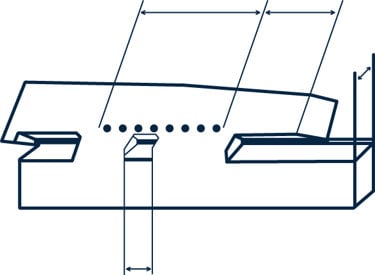
Figure 1: Bending the strip from the electrofusion joint sideways (source: ISO 21751)
A good electrofusion joint shows plastic deformation, with any failure occurring outside the fusion plane. A brittle failure at the fusion plane may indicate the presence of defects.
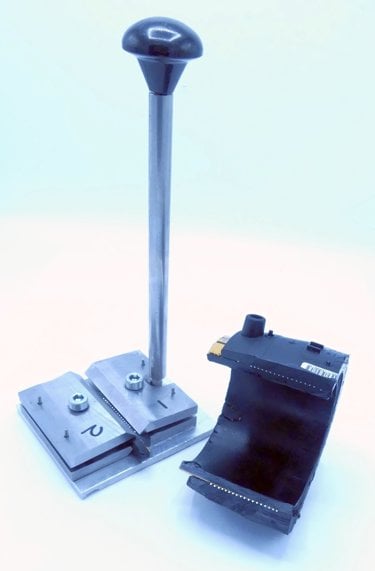
Figure 2: The tool for the strip bend test
At Kiwa, we use a test tool that was replicated based on the tool from the draft version of the future ISO 21751. Curious to see what this test looks like in practice? Watch the video below and discover how Kiwa uses this test to investigate the quality of electrofusion joints.