

Air Permeability Test Reporting
Receive a quote tailored to your needs
The main objective of a gaseous fire extinguishing system is to prevent fire damage to your equipment or business process. After all, prolonged failures of computer systems or business processes negatively affect your business continuity. Additionally, minimising environmental damage would be of great importance in chemical storage facilities.
Gaseous fire extinguishing systems are installed within the framework of NEN-EN 15004 and NFPA 2001. These standards outline that the duration of extinguishment shall be determined for proper system operation. Demonstration of the room’s air tightness shall be part of the final inspection process. Nowadays, real life tests of gaseous fire extinguishing systems using inert and chemical agents are no longer carried out, however, life tests are still mandatory for CO2 fire extinguishing systems in compliance with the standards. For a life test to be successful, the air tightness of the space is often measured prior to the test.
Assessment of a space’s air permeability is an important factor for effective protection. The air permeability test, using a door fan test, provides sufficient information regarding the duration of gaseous agent concentration relative to the highest location of the fire risk inside the space.
In addition to air permeability testing of a room during commissioning, the test can also be conducted periodically. Air permeability test results quantify the protection duration in the space as well as the time period during which fire cannot re-ignite. Kiwa FSS can conduct this test and prepare an air permeability test report for you. Following components are assessed during the test:
- Situation and/or location of the space in the relevant building section
- Leak-tightness of the space
- Locations of leaks in the space, illustrated in the report by photos
Why Kiwa Fire Safety & Security?
Kiwa Fire Safety & Security (Kiwa FSS) is a leading testing, inspection and certification (TIC) company, focusing on products, installations and companies in the field of fire and burglary protection. Kiwa FSS provides services in an expert, flexible, customer-oriented and innovative manner. These services include conducting inspections, certifying (fire) security companies, testing products and providing training from a fully independent, objective and integral position.

Your Inspection Conducted by Kiwa FSS Inspection
Read below which steps the inspection process consists of, up to and including the issuance of the inspection certificate.
Request for an Inspection
Would you like your (fire protection) system to be inspected by Kiwa FSS Inspection? If so, please contact us.
Quotation Acceptance
You will receive a quotation outlining the agreements and conditions applicable to the inspection. Once the signed quotation has been returned, the inspection process will be initiated.
Inspection Scheduling
After the quotation has been signed by both parties, the Kiwa FSS Planning Department will contact you to schedule the inspection. Following the appointment, you will receive a confirmation containing the details of the planned inspection.
Inspection Execution and Reporting
During the inspection, it will be determined whether the fire protection system complies with the applicable requirements. After completion of the inspection, the inspector records the findings and any non-conformities in an inspection report.
Review of the Inspection Report
The inspection report and its conclusion are subsequently reviewed to ensure the completeness, accuracy, and consistency of the assessment.
Non-Conformities and Corrective Actions
If deficiencies are identified, appropriate corrective actions must be implemented. These actions must be documented and supported with the necessary evidence, which is submitted to the inspector for review. Once the deficiencies have been resolved, the inspector will assess whether they can be closed. This assessment may be carried out administratively or through a re-inspection.
Decision on the Issuance of the Inspection Certificate
If the inspection results in a positive conclusion, an inspection certificate will be granted.
Issuance of the Inspection Certificate
Following a positive certification decision, the organization will receive the inspection report together with the corresponding inspection certificate.
Inspection Gaseous Fire Extinguishing System
Kiwa FSS inspects gaseous fire extinguishing systems based on the CCV inspection schemes and compliance with standards; prevent fire damage to computer and other equipment! If you want to know more about inspection of an extinguishing gas system, click here.

Inspection Foam Extinguishing Protection - Foam Extinguishing System
As an experienced partner in fire safety, Kiwa Fire Safety & Security (Kiwa FSS) applies a comprehensive approach to all relevant aspects of your foam extinguishing protection during a Foam Extinguishing System Inspection.
Inspection and Certification Sprinkler Systems
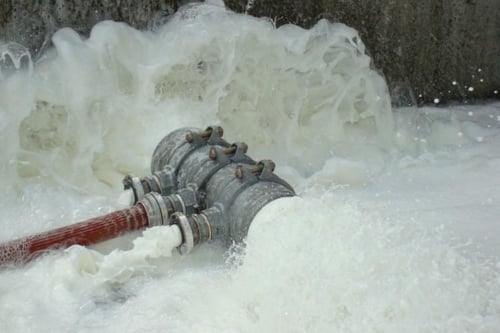
Kiwa FSS inspects sprinkler protection. Sprinkler systems are reliable fire control systems. A sprinkler system must detect, signal and control a starting fire. In many cases the fire will be extinguished by a few sprinklers.

Inspection Fire alarm and Evacuation Alarm Systems
In case of fire, fire alarm and evacuation alarm systems are crucial for the safety of occupants in a building and minimising damage. Kiwa FSS is the expert for inspection and certification of fire alarm systems and evacuation alarm systems, see here for more information!

Inspection Emergency Lighting
During an Emergency Lighting Inspection, Kiwa assesses the basic assumptions for the emergency lighting as well as the design data to determine that emergency lighting meets the objective.

Inspection CO/LPG Detection System
Standard (operating) conditions in motor vehicles parkings and storage garages can create an unsafe environment for occupants due to exhaust fumes or leaks. Carbon monoxide (CO) and LPG detection is one of the measures that can contribute to a safe environment for occupants.

Inspection Smoke Control Systems (RCS)
Smoke control systems (RBS) must create a smoke-free egress route for the building’s occupants. Because regulations and unambiguous basic assumptions are largely not available, it is important to work with partners with sufficient knowledge. Kiwa is such an expert partner.

Inspection and Certification Water Mist Systems
Kiwa FSS has a lot of experience inspecting and certifying water mist protection systems, based on both the CCV inspection schemes as compliance with standards. Kiwa FSS also conducts random inspections for certification bodies.
