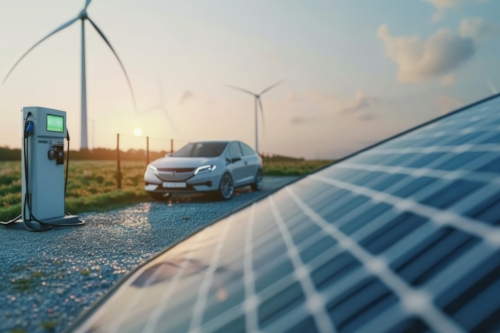
Hydrogen Mobility and Refueling stations
Hydrogen produced from renewable energy sources can make an important contribution to reducing greenhouse gas emissions from transport. Kiwa has an extensive test laboratory for hydrogen vehicle components.


Kiwa has traditionally been an expert in the field of natural gas. We now apply this expertise innovatively to hydrogen. We do this with tailored advice, testing, certificationa and training. Together, we take concrete steps.
We see two clear trends when it comes to energy transport and distribution, both driven by the energy transition.
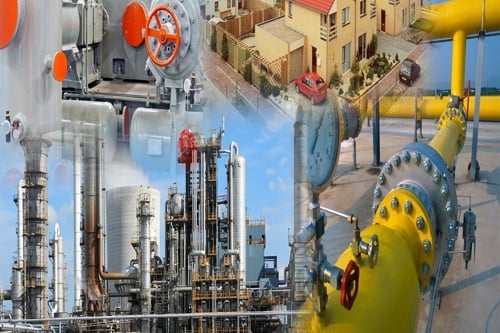
The first trend is the feasibility study of converting existing natural gas networks so they can be safely used for hydrogen transport.
The second trend is the construction of refueling stations to accommodate the expected growth of vehicles for large transport powered by green gas and hydrogen.
Hydrogen produced from renewable energy sources can make an important contribution to reducing greenhouse gas emissions from transport. Kiwa has an extensive test laboratory for hydrogen vehicle components.
One of the main fields of application for which hydrogen is being explored is the conversion of conventional gas distribution networks into hydrogen networks.

The energy infrastructure is becoming increasingly complex. In the past, all users were purchasers of electricity and gas or heat. Now a much greater variety of technologies is available such as heat pumps, home heat and power plants, solar-powered boilers and wind turbines.
✓ One-stop-shop: knowledge of all sustainable energy solutions under one roof
✓ Proven quality for testing, certification and training
✓ Independent advice and assessment
✓ Concrete innovation steps with a tailored approach
✓ Quick action with our clear vision on the energy transition
Our training programs can accelerate the energy transition! Curious about which training fits your situation? Our experts know exactly which training is right.

Our experts have deep knowledge and experience in specific fields. Questions, dilemmas or just curious?
A joint in a plastic piping system made of, for example, polyethylene (PE) must function reliably for many years, often under high pressure and in critical applications such as drinking water and gas networks. Therefore, it is essential to accurately assess the quality of these joints.

Sometimes liquids occur unintentionally in the gas distribution network. These include, for example, condensed gases from the gas network, often referred to as ‘natural gas condensate’. Liquids in the gas network can be harmful to both human health and the environment. Therefore, correct procedures for removing these liquids are essential. The procedures depend on the type of liquid, which cannot always be determined by visual inspection. Fortunately, there is a solution: infrared spectroscopy (FTIR). This measurement method makes it possible to identify the type of liquid.

At the request of Dutch drinking water company Vitens, Kiwa conducted an energy and decarbonization scan for Spannenburg, the largest drinking water production site in the Netherlands. The scan provides insight into Spannenburg’s energy consumption and explores possible measures to make the site more sustainable. The results provide building blocks for further steps towards reducing CO2 emissions.

The energy transition is leading to a growing need for excavation work in the Netherlands. The installation, replacement and reinforcement of cables and pipelines increasingly requires work to be carried out underground. Careful excavation is essential, as damage to data cables can disrupt internet, television and telephone services, causing inconvenience for users and costs for companies and society.