
A Smarter Way to Manage Industrial Assets with UNO

For many companies, critical information is still spread across spreadsheets, inspections, reports, and disconnected software systems, making it harder to respond quickly and make informed operational decisions. Added to that, unexpected downtime, disconnected systems, aging infrastructure, and growing compliance pressure are making industrial asset management more challenging than ever before.
We spoke to Hugo Branquinho, COO of Kiwa Portugal, about how industrial companies are using digital tools to improve visibility, reduce operational risk, and make smarter long-term asset decisions.

“Most of the time, decisions are still based on human judgment because companies either don’t have the data or don’t have all the information they need in one accessible place,” Hugo explains.
Making better decisions, faster
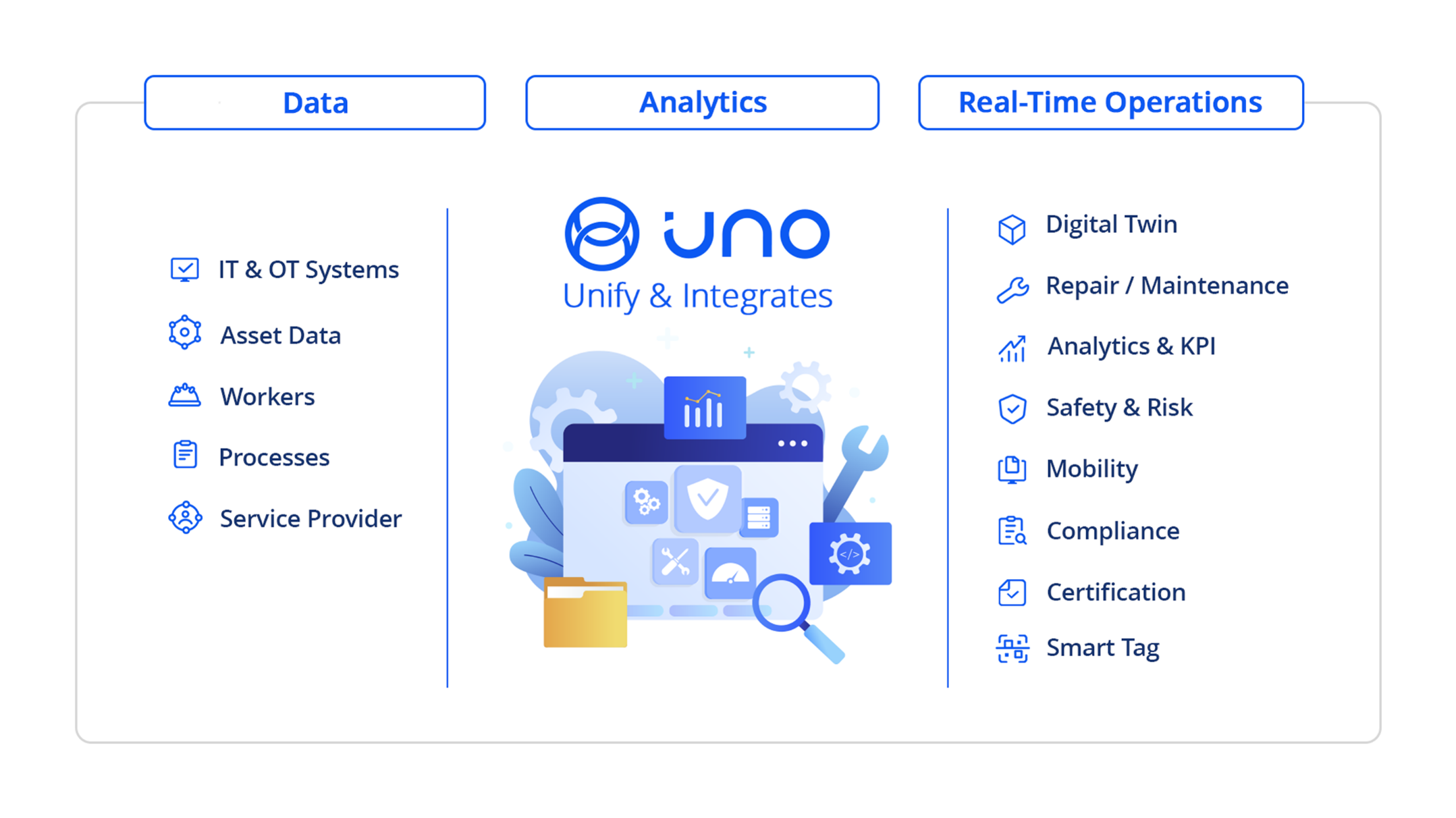
Kiwa Portugal’s UNO Digital Industrial Platform was designed to help solve this challenge. The platform connects operations, inspections, maintenance activities, assets, and compliance information in one digital environment, helping organizations bring operational, maintenance, and compliance information together in one place.
According to Hugo, one of the biggest challenges in asset management is the disconnect between the shop floor and management teams: “That’s why we are putting operations and digital together,” he says. “One of the main focuses is improving yield and increasing the perceived value for our customers.”
UNO centralizes asset data, inspection results, legal compliance information, operational status, and risk indicators in one place. This allows organizations to better understand:
- Asset condition
- Reliability
- Performance
- Compliance status
- Sustainability impact
- Operational risk.
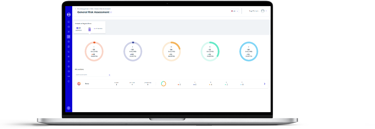
The platform combines these perspectives using three core pillars: 1) condition, 2) performance, and 3) risk.
“At Kiwa Portugal, we evaluate the asset using an integrated functional analysis that combines all three pillars into one metric, so you can position the asset and understand its overall score,” Hugo explains.
This helps managers identify which assets require immediate attention, which risks are increasing, and where investment decisions may soon be needed.
Preventing costly failures before they happen
For many industrial organizations, maintenance is still highly reactive. Problems are often only addressed after failures occur, increasing downtime, operational disruption, and costs. UNO was designed to support a more predictive approach.
There are studies showing predictive maintenance costs 40% less than corrective maintenance,” Hugo explains, referring to findings from the U.S. Department of Energy’s Operations & Maintenance Best Practices Guide (Release 3.0), which reports that industrial facilities can achieve average cost savings exceeding 30% to 40% when moving away from reactive maintenance.
“If you prevent failure instead of reacting afterward, the benefits can be substantial:
- You use fewer replacement parts
- You reduce waste
- You lower energy consumption
- You reduce environmental impact.
This is sustainability.”
The UNO platform helps companies identify gaps, create action plans, monitor asset health, and plan maintenance earlier to reduce the likelihood of failures. When maintenance gaps are identified, the platform can also calculate financial impact and forecast future investment needs. “We can identify exactly which assets need replacement and where they are located,” Hugo says.
For organizations managing thousands of industrial assets, this level of information can help improve budgeting, reduce unexpected failures, and support better long-term planning.
Giving teams more time on site
Added to the abovementioned benefits, UNO replaces paper-based and Excel-driven processes with digital workflows that work across smartphones, tablets, and computers. Field teams can carry out inspections, report incidents, access technical documentation, and collect evidence directly on site. Teams can also continue inspections and access technical information even in environments with limited connectivity. Moreover, reports, inspection evidence, and operational updates are synchronized in real time, allowing managers to see inspection activity and operational updates immediately.
Everything is done digitally and automatically, without back-office work. They complete inspections without needing desk time afterward.
Every inspection, action, and maintenance activity is digitally traceable, helping organizations improve traceability and prepare for audits more efficiently in highly regulated environments.
The platform also supports Digital Twin functionality and laser scanning technology, allowing sites and assets to be visualized remotely with high precision. “The error margin is only one to two millimeters,” Hugo explains. “You can walk through the digital environment, take measurements, and inspect remotely.”
In practice, this means teams can quickly locate assets, review inspection history, understand operational constraints, and keep track of inspections and asset activity across large industrial sites.
Connecting the field with the bigger picture
Hugo explains that UNO is not intended to replace existing ERP systems such as SAP. Instead, it helps bridge the gap between enterprise software and day-to-day operational activity. “We are not replacing ERP,” Hugo says. “We integrate with it and bridge the gap between ERP systems and the shop floor.”
For example, when a maintenance ticket is opened in the ERP system, UNO can capture the intermediate inspection steps, field evidence, actions taken, and operational updates before sending the completed status back into the ERP system. This creates greater transparency around what actually happens between opening and closing maintenance activities.
Making sustainability part of daily operations
For Hugo, sustainability in asset management is not only about reporting. It is about reducing waste, improving maintenance planning, and making more informed day-to-day decisions.
“UNO can also help organizations calculate the CO₂ impact of specific maintenance activities, such as lubrication processes. Operators can compare different oils not only by technical suitability, but also by environmental impact. So sustainability becomes operational and visible for workers making decisions on the ground.”
Helping high-risk industries stay in control
UNO is specifically designed for high-risk and highly regulated industries, including:
- Oil and gas
- Chemicals
- Water and wastewater
- Infrastructure
- Energy and renewables
- Construction and industry.
The platform also supports areas such as HSE management, contractor management, ATEX and IECEx compliance, maintenance planning, gap analysis, and asset health monitoring for high-risk industrial environments. According to Hugo, some clients already use the platform to support ISO 55000 compliance audits, helping demonstrate compliance through real-time operational evidence.
From asset data to smarter planning
The real challenge for industrial organizations is turning data into clear operational decisions before risks become failures. “Companies should perform technical due diligence continuously,” he summarized. “Risk never stops.”
For industrial organizations managing growing operational complexity, the challenge is turning that data into faster, smarter, and more confident decisions.

News
New EU Battery Regulations are Reshaping Battery Energy Storage Systems Projects
News
Inside Kiwa’s 2025 ESG Report
News
Could Your Hydrogen Production Qualify as Low Carbon?

News
Why PV Module Quality Is a Critical Risk in 2026

News
Prepare for Construction Products Regulation (CPR) Compliance

News
How Companies in Portugal Reduce Their Carbon Footprint

News
What the EU’s new carbon rules mean for your business in 2026

News
Guiding Lebensbaum’s Path to Sustainable Excellence

News
CPR Compliance — Your Last Chance to Act

News
LCA + EPD: The Acronyms That Will Shape the Future

News
Due Diligence Is Now a Business Strategy

News
The Solar Scorecard That’s Shaping a Global Industry

News
EU Battery Regulation: Deadlines Are Closer Than You Think

News
Food Safety Meets Sustainability: What’s Next for the Industry

News
5 Sustainability Roadblocks for Heat Pump Makers — And How We Solve Them

News
From Plastic Waste to Certified Reuse: The Path to Circularity
