

FSSC 22000 Food Safety
Receive a quote tailored to your needs
The FSSC 22000 standard focusses on certifying the Food Safety Management System of an organisation. FSSC 22000 was designed to meet the needs of an international, GFSI recognised food safety scheme based on the ISO system. The standard is based on the ISO 22000 standard, with the addition of a sector-specific Pre-Requisite Program (PRP), and some additional standards including for Food Fraud and Food Defense (bioterrorism).
The benefits of FSSC 22000 certification are:
- A management system demonstrably aimed at safeguarding food safety risks that can occur inside and outside an organisation;
- Compliance with relevant legislation and regulations and the requirements of your customers;
- Continuous improvement of processes and therefore your organisation;
- FSSC 22000 is GFSI recognised (international);
- The scheme is owned and maintained by an independent foundation.
Learn more about the latest version
On May 1st, 2026 the Version 7 has been released.
The FSSC 22000 standard and additional documents about the new version are freely available here.
How does it work?
You can contact us to request a quotation for FSSC 22000. If you approve the quotation, we will contact you to plan the initial audit. This audit generally involves two stages: first an audit of the documentation, followed by a practical audit. If the initial audit does not reveal any issues, the FSSC 22000 certificate will be issued. This certificate is valid for three years. However, an annual inspection is performed to ensure your system is still compliant.
If you hold Kiwa certification for other schemes, we prefer to perform the annual audits concurrently.
Recalls and Early Warning System (EWS)
As a FSSC 22000 certified company, you may detect abnormal and (possibly) unsafe products. In this case, you must submit a report to the relevant organisations and inform us. We will then contact you if any additional action needs to be taken.
Please contact us if you would like information about which certificate is suitable for your company.
Download our free GFSI e-guide!
Download our latest GFSI E-Guide and get a head start!
Services part of this solution
Kiwa offers a complete solution for GFSI certification, enabling food businesses to meet international standards and build trust across the supply chain.
Certification
GlobalG.A.P. certification
GLOBALG.A.P. certification with Kiwa: reduce your food safety risks, increase your transparency and support sustainable agriculture to meet customer demands.

Certification
IFS Food Certification Services
Ensure food safety and quality with IFS Food Certification from Kiwa. Our expert auditing services help organizations comply with international food safety standards. Contact us today!

Certification
BRCGS Food Safety
Get your food business certified with BRCGS Food Safety through Kiwa. Our expert auditors ensure compliance with GFSI benchmarked standards. Request a quote today!

Certification
FSSC 22000 Food Safety
FSSC 22000 Food Safety System Certification with Kiwa: improve your food manufacturing safety, meet customer demands and increase your profit.

Certification
SQF - Safe Quality Food Certification
Recognized by the Global Food Safety Initiative (GFSI), the SQF family of food safety and quality codes are designed to meet industry, customer, and regulatory requirements for all sectors of the food supply chain.

Certification
GRMS Certificate
Discover the elevated standards of the Global Red Meat Standard (GRMS), specialized in ensuring unparalleled transparency, hygiene, and quality in meat production.

Frequently Asked Questions (FAQs)
What is FSSC 22000 certification?
FSSC 22000 is a GFSI-recognized food safety certification scheme designed for organizations throughout the food supply chain. It is based on ISO 22000 and combines food safety management system requirements with sector-specific prerequisite programmes and additional FSSC requirements.
FSSC 22000 certification helps organizations demonstrate their commitment to food safety, risk management and continual improvement.
Who is FSSC 22000 certification intended for?
FSSC 22000 certification is applicable to a wide range of organizations in the food supply chain, including food manufacturers, ingredient producers, packaging manufacturers, storage and distribution providers and food-related service organizations.
The scheme is suitable for organizations seeking a structured, management system-based approach to food safety.
What are the benefits of FSSC 22000 certification?
FSSC 22000 certification helps organizations establish, implement and maintain an effective food safety management system. Certification provides independent verification that food safety risks are identified and controlled throughout the organization.
As a GFSI-recognized certification scheme, FSSC 22000 is widely accepted by customers, retailers and food businesses worldwide.
Is FSSC 22000 recognized by GFSI?
Yes. FSSC 22000 is benchmarked and recognized by the Global Food Safety Initiative (GFSI). This recognition provides confidence that certified organizations operate according to internationally accepted food safety requirements.
How does the FSSC 22000 certification process work?
The certification process typically includes:
1. Application and quotation
2. Development and implementation of the food safety management system
3. Stage 1 audit (documentation and readiness review)
4. Stage 2 certification audit
5. Review of audit findings
6. Certification decision
7. Issuance of certificate
Kiwa's experts can guide organisations through every stage of the certification process
How often are FSSC 22000 audits required?
FSSC 22000 certification operates on a three-year certification cycle. Following the initial certification audit, certified organizations undergo annual surveillance audits and a recertification audit at the end of the certification cycle.
In addition, organizations are required to participate in unannounced audits as part of the scheme requirements.
How much does FSSC 22000 certification cost?
The cost of FSSC 22000 certification depends on factors such as the size of the organization, number of employees, scope of certification, food chain category and audit duration.
Because every organization is different, certification costs are calculated individually. Kiwa can provide a quotation based on your specific activities and certification requirements.
How can I obtain a quote for FSSC 22000 certification?
Organizations interested in FSSC 22000 certification can contact Kiwa for a tailored quotation. The proposal will be based on factors such as organizational complexity, certification scope and number of locations.
What is the difference between FSSC 22000 and BRCGS Food Safety?
Both FSSC 22000 and BRCGS Food Safety are GFSI-recognized food safety certification schemes. However, they differ in structure and approach.
FSSC 22000 is based on ISO management system principles and focuses on integrating food safety into an organization's management processes.
BRCGS Food Safety follows a more prescriptive audit framework with detailed operational requirements and grading outcomes.
The most suitable scheme often depends on customer expectations, business objectives and existing management systems.
What is the difference between FSSC 22000 and IFS Food?
FSSC 22000 and IFS Food are both internationally recognized food safety certification schemes used throughout the food industry.
FSSC 22000 follows an ISO-based management system approach, while IFS Food applies a detailed audit framework with a scoring methodology focused on food safety, product quality and legal compliance.
Organizations often select a scheme based on customer requirements, supply chain expectations and their preferred management system approach.
Is FSSC 22000 based on ISO 22000?
Yes. ISO 22000 forms the foundation of the FSSC 22000 certification scheme. FSSC 22000 combines ISO 22000 with sector-specific prerequisite programmes and additional scheme requirements.
This combination provides a comprehensive framework for managing food safety hazards and establishing effective food safety management systems.
Are unannounced audits required for FSSC 22000 certification?
Yes. Unannounced audits are an integral part of the FSSC 22000 certification scheme.
An unannounced audit is conducted without prior notification to the organization and assesses how effectively food safety controls are implemented during normal operations. In line with GFSI benchmarking requirements, certified organizations must undergo an unannounced audit at least once during each three-year certification cycle.
Which certification scheme is right for my business: FSSC 22000, BRCGS or IFS?
FSSC 22000, BRCGS Food Safety and IFS Food are all GFSI-recognized food safety certification schemes. Each scheme is designed to provide assurance that food safety management systems and operational controls meet internationally accepted requirements.
While there is significant overlap in their objectives, the most suitable scheme depends on factors such as customer requirements, supply chain expectations, target markets and the maturity of existing management systems. Many organizations select a certification scheme based on customer specifications or industry expectations.
Kiwa can help identify the certification scheme that best aligns with your business activities, customer requirements and certification objectives.

FEMAS Certification
Kiwa Agri Food | We certify the AIC's FEMAS scheme

BRC Global Standard for Food Safety
BRCGS for Food Safety certification with Kiwa: improve your food safety, meet customer demands and showcase your performance.

GlobalG.A.P. certification
GLOBALG.A.P. certification with Kiwa: reduce your food safety risks, increase your transparency and support sustainable agriculture to meet customer demands.
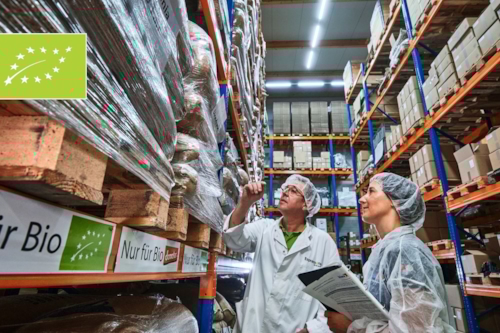
EU organic certification according to Reg. (EU) 2018/848
Food from controlled organic farming demonstrably promotes biodiversity and species conservation and contributes to active climate protection. What's more, the organic market is still booming! You don't want to miss this opportunity to label your products as organic or to convert your farm to organic? Then you can benefit from our many years of expertise in the field of organic certification in accordance with the EU Organic Regulation (No. 2018/848) for organic food production processes. We are the first state-accredited organic inspection body in Germany.
HACCP Certification- Hazard Analysis and Critical Control Points
Hazard Analysis and Critical Control Points (HACCP) certification with Kiwa: improve your food safety performance, meet consumer demands & increase your profit.
ISO 22000 Food Safety Management
ISO 22000 Food Safety Certification with Kiwa: improve your food safety performance, meet consumer demands and increase your profit.
Better Life quality label / Beter Leven keurmerk
The Beter Leven keurmerk (Better Life quality label) of the Dutch Society for the Protection of Animals (SPA) demonstrates that you care about animal welfare. Kiwa VERIN certifies livestock farmers, processing companies and the retail sector.

BRCGS Food Safety
Get your food business certified with BRCGS Food Safety through Kiwa. Our expert auditors ensure compliance with GFSI benchmarked standards. Request a quote today!
ISO 22000
Kiwa | ISO 22000

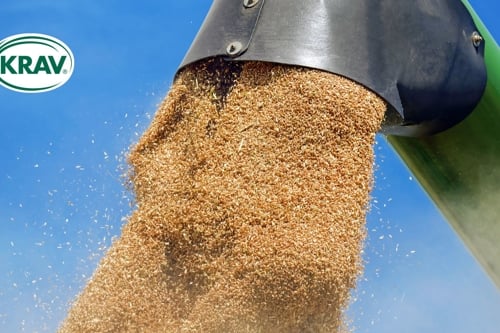
KRAV - Swedish Organic Verification
KRAV certification with Kiwa: prove the organic origin of your products, meet customer demands and sell in the Swedish market.
Rainforest Alliance Supply Chain Certification
Kiwa offers certification according to the Rainforest Alliance Supply Chain standard. This is suitable for importers/traders and processors of crops such as coffee, tea, cocoa and hazelnuts. After certification the products can be labelled with Rainforest Alliance logo which will give added value to the products.

GFSI - Global Markets Program
Learn how the GFSI Global Markets Program by Kiwa helps businesses achieve food safety certification, reducing risks in global supply chains. Explore benefits for suppliers, regulators, and retailers.

CanadaGAP Certification for Fresh Produce
CanadaGAP certification verifies food safety practices for Canadian fresh produce operations, ensuring compliance with national and international standards.
